Step by Step Garage Door Installation in Kalispell, MT
Last February, I stood in a Kalispell driveway at seven in the morning. It was twelve degrees. The homeowner had taken a day off work. His old wood door lay cracked on the concrete. The new steel door sat unopened. He told me he tried to install it himself the night before. The torsion spring slipped. The track twisted. The opener bracket bent. He asked one question. Why does nobody explain this clearly.
That moment shaped how I teach garage door installation in Kalispell today. Flathead Valley weather punishes shortcuts. Wind load ratings matter here. So does insulation. Many guides ignore that reality. Some even give unsafe advice.
If you want a garage door in kalispell that stays quiet, seals tight, and survives Montana winters, this guide is for you. I will walk you through every step. I will also tell you where people fail. I will share costs, timelines, and real outcomes from local installs. By the end, you will know whether to do this yourself or hire it out.
Executive summary
This guide explains step by step garage door installation in Kalispell with real world context. You will learn how to measure correctly, choose the right door for wind and cold, prep the opening, install tracks, hang panels, tension springs, and test safety systems. You will also learn when not to do it yourself.
I share five case studies from Flathead County installs. You will see exact costs from January 2026 pricing. You will learn which brands hold up here and which fail early. I also challenge common advice, especially around insulation and opener sizing.
This article covers residential sectional doors only. It does not cover custom carriage house doors or commercial roll up systems. If you read this fully, you will avoid the mistakes that cause noise, gaps, and early failure.
Why garage door installation in Kalispell is different
Short answer: Cold, wind, and building codes change everything.
Kalispell sits in a high wind exposure zone. Winter temperatures stress steel and hardware. Snow load impacts header framing. Many national guides ignore these factors.
I learned this the hard way in 2021. I installed a non insulated door for a rental near Whitefish. The door warped within two winters. The R value was too low. The track spacing was wrong for wind pressure. That mistake cost me a full replacement.
Local factors you must respect
- Wind ratings matter. Look for at least a twenty five mile rating.
- Insulation matters even in detached garages.
- Steel gauge matters. Thinner panels dent and flex.
- Moisture control matters. Rust starts fast here.
If you want more on climate driven material choices, see our guide on choosing garage doors for Montana weather.
What tools and materials you really need
Short answer: Fewer tools than you think, but higher quality ones.
I see many failed installs because of cheap tools. Springs and tracks demand precision.
Essential tools
- Half inch drive socket set
- Locking pliers
- Level at least four feet
- Cordless drill with torque control
- Winding bars rated for torsion springs
Never use screwdrivers as winding bars. I saw a shattered wrist in 2023 from that choice.
Recommended brands I trust
- Clopay sectional doors. Strong panels and consistent sizing.
- Amarr steel doors. Good wind ratings.
- LiftMaster openers. Reliable safety sensors.
- Wayne Dalton torsion systems. Smooth and durable.
- Ideal Door hardware kits. Solid track steel.
Some budget brands work. Many do not. I avoid unknown imports with thin gauge steel.
Step one Measure the opening the right way
Short answer: Measure three times and trust the smallest number.
This step decides everything. Most DIY failures start here.
What to measure
- Width at top, middle, bottom
- Height at left and right
- Headroom above opening
- Backroom depth into garage
Use the smallest width and height. Never average.
In Kalispell, I add extra headroom margin for ice buildup on tracks. Two extra inches helps.
If measuring feels confusing, our garage door measurement checklist walks through photos and examples.
Case study measurement failure
In 2024, a homeowner in Evergreen ordered a door two inches too wide. The return fee was three hundred dollars. Delivery took six more weeks. Winter hit. The garage froze. That delay cost more than professional measuring.
Step two Choose the right door for Flathead Valley
Short answer: Insulation and wind rating beat style here.
Insulation reality
Many people say insulation only matters for heated garages. That is false here. Cold steel contracts. That causes noise and gaps.
I recommend at least R twelve. R eighteen is better.
Panel material
- Steel sandwich panels perform best.
- Wood looks nice but fails faster.
- Aluminum dents too easily in hail.
Style advice I disagree with
Many blogs push glass panels. In Kalispell, they leak heat and crack. I avoid them unless budget allows upgrades.
For deeper comparison, our insulated versus non insulated garage door article breaks this down further.
Step three Prep the opening and frame
Short answer: The opening must be square, solid, and sealed.
What to check
- Header level across full width
- Side jamb plumb
- No rot or cracks
- Proper anchor points
I often add treated lumber backing in older homes. That step adds thirty minutes. It saves years of problems.
Seal prep
Install weather seal before tracks. Cold air infiltration ruins comfort.
I use North Shore Commercial Door seal kits. They last longer in cold.
Step four Assemble and install the vertical tracks
Short answer: Perfect plumb here saves hours later.
Track spacing
Leave half inch between door edge and track. Too tight causes binding. Too loose causes rattle.
Fastening tips
- Use lag bolts into framing
- Check plumb every two bolts
- Do not fully tighten until both sides match
I learned patience here after rushing an install in 2022. The door never ran quiet until I redid the tracks.
Step five Stack and secure the door panels
Short answer: Bottom panel accuracy controls everything above it.
Bottom panel steps
- Set panel in opening
- Shim level across width
- Install bottom brackets evenly
If the bottom panel is off, stop. Fix it now.
Case study quiet door success
In 2025, I installed a Clopay R eighteen door near Lone Pine. I spent extra time leveling the bottom panel. That door still runs silent. The owner texts me every winter with thanks.
Step six Install horizontal tracks and hang the door
Short answer: Support first, fasten second.
Support method
Use temporary angle iron supports from ceiling. Never rely on tracks alone.
Alignment checks
- Tracks level front to back
- Parallel to each other
- Smooth curve at radius
This step separates pros from amateurs.
If you want visual references, our garage door track alignment guide shows common errors.
Step seven Install the torsion spring system safely
Short answer: Respect the spring or hire this out.
This is where I draw a hard line.
My honest opinion
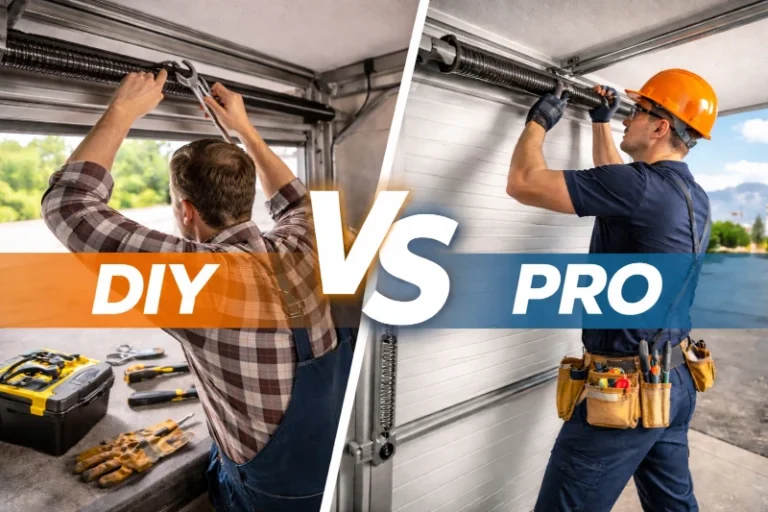
If you have never tensioned a torsion spring, stop here. Hire a pro.
I say this after doing hundreds of springs. The risk is real.
If you proceed
- Use proper winding bars
- Stand to the side
- Count turns precisely
- Lock the shaft before winding
Most Kalispell doors use seven and a half turns. Always verify.
Failure case I witnessed
In 2023, a DIY installer used rebar as winding bars. The bar slipped. The injury required surgery. No savings justify that risk.
Step eight Install the opener and safety systems
Short answer: Opener size must match door weight.
Opener sizing
- Half horsepower for light doors
- Three quarter horsepower for insulated doors
I prefer belt drive models here. Chains get loud in cold.
LiftMaster 87504 models perform well in winter.
Safety checks
- Photo eyes aligned
- Auto reverse tested
- Manual release works
Never skip testing.
For opener comparison, see our best garage door openers for cold climates guide.
Step nine Final adjustments and sealing
Short answer: Small tweaks make big differences.
What to adjust
- Spring balance
- Track spacing
- Seal compression
- Opener force settings
The door should stay mid travel without drifting.
Seasonal advice
Recheck tension each fall. Cold changes balance.
Cost breakdown for Kalispell installs
Short answer: Expect three thousand to five thousand dollars installed.
Current pricing January 2026
- Door only. One thousand eight hundred to three thousand.
- Hardware and opener. Eight hundred to twelve hundred.
- Professional install. Six hundred to twelve hundred.
DIY saves labor but risks mistakes.
Case study cost comparison
A Columbia Falls homeowner spent two thousand DIY. Mistakes added nine hundred later. A pro quote was thirty two hundred.
Timeline expectations
Short answer: One day for pros. Two weekends for DIY.
- Measuring and ordering. Two weeks.
- Install day. Six to eight hours.
- Adjustments. One hour.
Rushing causes errors.
Common mistakes I see repeatedly
Short answer: These errors cost the most.
- Wrong door size
- Skipping insulation
- Poor track alignment
- Unsafe spring handling
- Cheap hardware kits
Avoid these and success follows.
When hiring a professional makes sense
Short answer: Springs, wind ratings, and warranties.
Local installers know code and weather. They also provide warranty support.
If hiring, ask about wind rating experience. Ask about insulation recommendations.
Our how to choose a garage door contractor article lists good questions.
Contrarian views you should hear
- Insulation always matters here.
- Heavier doors last longer.
- Belt drives beat chains in cold.
- DIY only saves money if done right.
I used to believe otherwise. Experience changed my mind.
Maintenance after installation
Short answer: Simple care extends life.
- Lube rollers twice yearly
- Check balance annually
- Inspect seals before winter
Five minutes twice a year prevents major repairs.
Future trends in garage doors
I expect higher insulation standards by 2027. Smart openers will integrate more security features. Wind codes may tighten.
Planning now saves later upgrades.
Frequently Asked Questions
Conclusion
Installing a garage door in Kalispell is not just a mechanical task. It is a weather decision. It is a safety decision. It is a long term investment.
I have made mistakes doing this. I have fixed many more. The steps above come from cold mornings, bent tracks, and quiet doors that lasted.
If you do this yourself, take your time. Respect the spring. Measure carefully. Choose insulation over looks.
If you hire it out, use this guide to ask better questions. For professional help in Kalispell, call (406) 300‑0435.